|
Hi ,
Here’s something that surprised me when doing research for my upcoming book Beyond Belief:
Positive visualization often doesn't work. In fact, it can make things worse.
I know that's hard to hear, especially when Instagram is filled with manifestation coaches and vision boards. But the research is crystal clear.
📚The Problem With Imagining Success
Dr. Gabriele Oettingen at NYU spent decades studying goal-setting. Her findings: The more positively people fantasize about success, the less well they actually do.
In one study, she hooked people up to blood pressure monitors and asked them to visualize achieving their biggest dreams: landing the job, losing weight, finding romance.
Their blood pressure dropped immediately.
Why? The fantasy gave them a temporary high...but it drained the energy needed for actual effort. Their brains acted as if they'd already succeeded.
From academic tests to weight loss to career advancement, positive fantasies consistently led to worse outcomes.
🧲Here's Why Positive Thinking Backfires
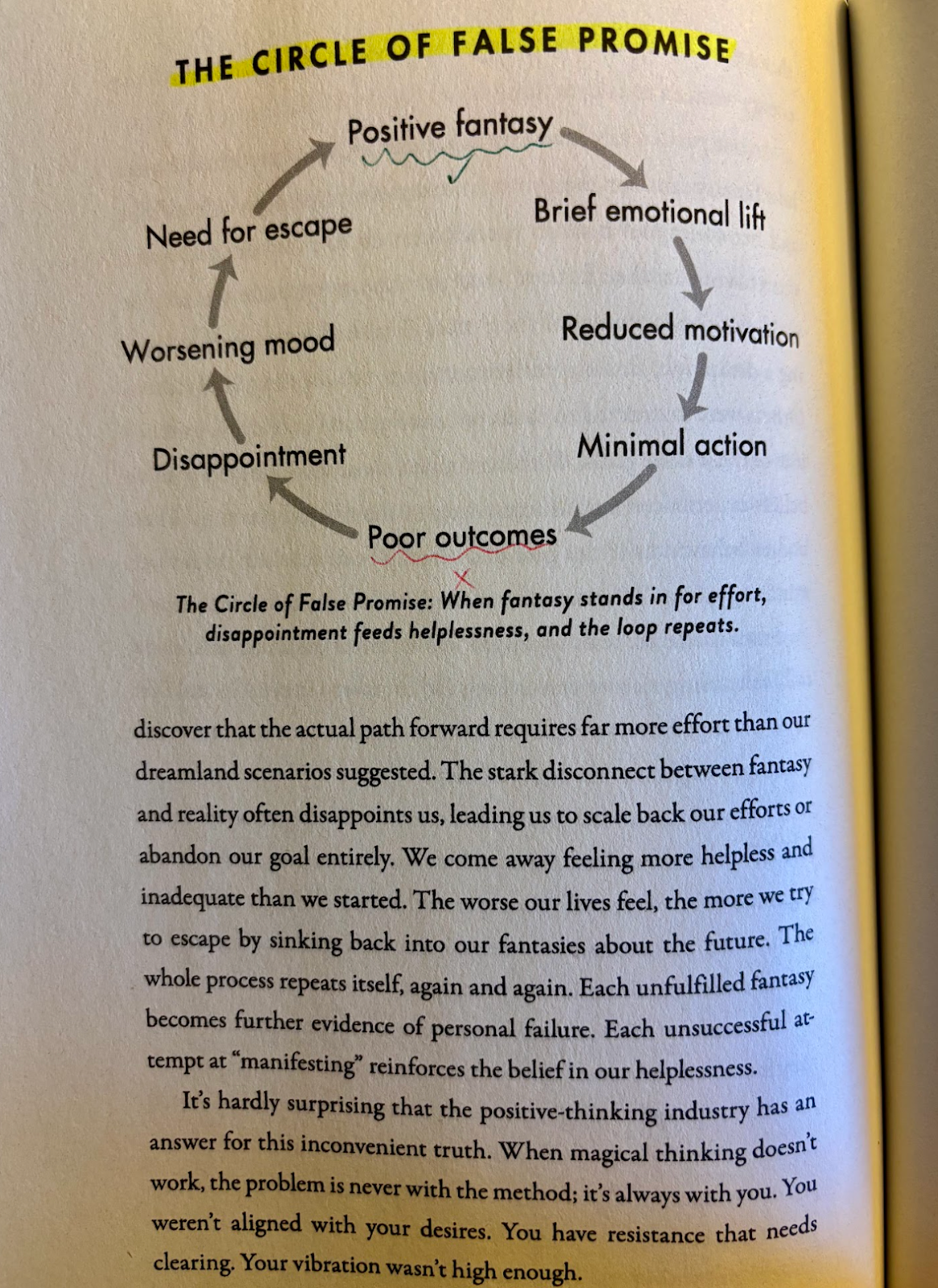
When you vividly imagine achieving a goal, your brain registers some of the emotional reward before any work has been done. You feel encouraged, even satisfied, as if progress is already underway.
But the reality of pursuing that goal is almost always harder than the fantasy suggests. When friction appears, effort declines, persistence weakens, and the gap between imagination and reality feels discouraging.
To escape those feelings, it’s easy to return to the fantasy rather than engage the work itself. Over time, this creates a loop in which imagining success subtly replaces pursuing it.
In Beyond Belief, I call this "The Circle of False Promise." |